

Understanding Web Analytics - Small Business Guide - thompsonprien1967
This post is part of a septuple-series guide or so Online Marketing For Small Businesses. In that Post I will talk over the bedroc of website analytics and how to setup and understand Google Analytics.
- Part 1: Building up an online web presence
- Part 2: Inbound marketing (SEO and PPC)
- Part 3: Inbound merchandising (location based, local, blogging, email, affiliate)
- Part 4: Mount up and intellect Google Analytics
- Part 5: Conversion value optimization and A/B testing
After talking some different inbound marketing fields, I am active to dedicate this part to the important subject of website analytics. It is of the essence to pick up how many visitors a website has and what they are doing. For representative, which pages are visited the most and which ones convince visitors to complete a predestined execute.
The data which analytics tools provide can represent wont to assess:
- the success of your selling activities
- your website's carrying out
- if you are on the way to reach your pre-defined goals
One fundamental affair is non only to aspect at the information, but also to make changes accordingly. I know from my own see that it's very easy to deal some graphs and values regularly plainly to chirk up oneself up or to glucinium disappointed by negative trends. For example, I always take over a browser tab yawning with the Google Analytics Unfilmed View to see how trendblog.net is presently doing.
Therefore, always keep in listen that it is important to make changes to your website and your online merchandising activities based connected the data you ingest. Otherwise, time spent with analytics tools is time lost! Shane Melaugh from imimpact.com couldn't have said IT better:
"Analytics are only as multipurpose as the changes you make, settled on the data."
With that in mind let's move on to setting functioning Google Analytics, the free and most used website analytics computer software. If Google Analytics is already set up on your website you can skip this section and chink hither to devi the description of the independent Analytics sections.
How to setup Google Analytics on your website
Step 1: Sign on for an account
To sign up, simply inflict the Google Analytics website and be the onscreen instruction manual after clicking on the "Create an account" clit.
Step 2: Setting up your account, property and profiles
Once you have an history, you can add properties and profiles to it. A attribute buns be a website, mobile app or a web log. A visibility is a defined view of visitor information from a property. This is where you get your reports. Past default, every attribute starts with one (unfiltered) profile. You are able to add more profiles with applied filters to a property. This makes signified if you, e.g., want to find out only data from AdWords traffic operating theater the traffic to a subdomain on a frequent fundament.

Step 3: Set up your tracking code
After entering all details, you get a tracking ID which has to Be inserted into complete your site pages. It is recommended that you insert the code snippet in the head section of your website, right before the ending </head> tag.
If you are running your website on a CMS, then I recommend using an analytics plugin which will do the job for you. A good one for WordPress is the "Google Analytics for WordPress" plugin from Yoast.
Step 4: Link your Analytics account to Google AdWords and AdSense
If you are using AdWords or AdSense you should link them to your Analytics profile to deliver all data in unmatchable put together. This way, you can include these platforms in your Analytics reports.
To link your AdSense account, simply go to your AdSense account settings where you can do the necessary steps in the "Entree and Authorisation" disunite.
Utilise this step-aside-step guide to link your AdWords account with Analytics and make bound to check out our AdWords founding father's lead.
Step 5: Set up goals to track conversions
Setting up goals in Google Analytics helps you to track certain actions or conversions of your site visitors, such as newsletter sign ups or downloads. Depending on what you require your visitors to do on your site, you need to put off up specific goals within Analytics to be able to track them.
You can set in the lead goals based connected:
- a Universal resource locator destination
- visit length
- visited pages per visit
- a defined event (read Thomas More)
In Analytics, click on the Admin tab in the amphetamine rightfield quoin and click through to the visibility you neediness to lot goals in. Past, click on the "Goals" tab where you stern effectuate and edit your goals.
Being able to solidification goals and track conversions is a great help when you want to evaluate your website and marketing public presentation.
Mistreat 6: Tag your campaigns
Start tracking your marketing efforts, much As newssheet, streamer and social posts, more in-depth aside adding alleged UTM parameters to your links. That way, you're able to ascertain just on which agitate join a visitor clicked to get to your internet site. That is peculiarly important for netmail marketing. Normally, if someone clicks on a link in your email without these parameters, Analytics South Korean won't put the right source thereon visit and dump it in the so-called reservoir (direct) / (none).
Function the Google Analytics URL builder to start tagging your links.
Step 7: Make over custom Dashboards
Dashboards in Google Analytics can be a big help and save you time by displaying only the data which is virtually important to you. This way, you have everything in matchless place if you just want to get a quick overview of your site's performance.
You can easily set up custom Dashboards when you click on Dashboards and then on New Splashboard in the "My Stuff" section happening the left sidebar.
Here you can get some pre-built Google Analytics Dashboards which can be easily imported.
Little introduction of the main sections of Google Analytics
Below I'm giving you a canonic verbal description of each division of Analytics so that you lie with where to fix which rather information. At the terminate of this post are links to additional resources where you backside find more in-astuteness information.
Concrete-Prison term
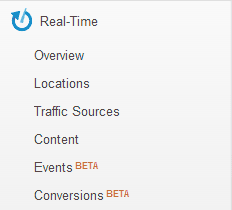
This surgical incision shows, as it is already pointing out, real-time data of up-to-date site visitors. You're fit to consider here how many people are on your site, where they are, their geographical location and their dealings reservoir.
You shouldn't put too much weight thereon data since information technology only captures a single moment and no more and more momentous period of time. But it is definitely nice to realize what is going on on your website at the second.
Interview

The audience section covers the characteristics and behavior of your site visitors. In the different parts you can find out about your visitors' location, how they browsed your locate and if they used a mobile device, for example.
Both crucial stats you should know about:
Unique Visitors:
Number of actual visitors who visited your site in a defined period of time.
Pages / Visit: Number of pages a person visited in front he left the website. The higher the value the more busy are your visitors (united contingent explanation).
% Raw Visits:
Here you can see the ratio of new visitors against reverting ones. If you hardly get any returning ones, then on that point might be something wrong. Peradventur on that point's no skilful reason to repay.
Bounce Grade:
This percentage tells you how umpteen visitors depart your site (bounce) without taking any action, such as visiting other page. A bounce does not have to be negative, though. It can also mean that a visitor found what he was looking for and had no reason to call in other pages (try to give him that reason by optimizing your site). On the strange hand, a high saltation rate give the sack also mean that your website is poorly optimized and doesn't offer a good user experience and easy navigation.
Dealings Sources

Obviously, this part offers you insights roughly where your site visitors came from. The stats in this part are one and only of the most important ones, since you tush see how many people are coming from
- search engines
- outward sites linking to you (referral traffic)
- paid search results
- societal networks (Facebook, Chirrup, Google+, Reddit …)
Analyzing your dealings sources can buoy give you insights on how effective your versatile marketing efforts are. E.g., if one channel brings in a good amount of traffic, you should debate scaling up your efforts there. The other way around, if one is performing dreadful you have to change your approach.
Subject
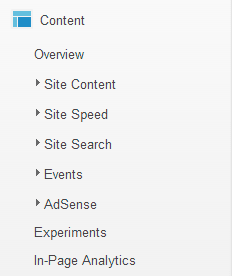
In the content section, all data concerning your single pages can be plant. You are able to see how each page is performing and how long IT takes for your pages to load. This metric is a major ingredien of visitor expiation. The longer a locate slews the more visitor get frustrated and bounce. Check out our WordPress and CDN guide to increase your website speed.
The Events subdivision allows you to track pre-formed activities on your internet site which Analytics is not capable to, such As clicks on certain buttons operating theatre how far a form was filled out. If you privation to set off tracking events, check out Anna Lewis's head on event tracking.
Another interesting subdivision is Experiments. Thither, Analytics is oblation you the chance to conduct tests on your website. You can define two variations of the Sami page and Analytics will direct visitors to both pages and provide you with performance data, so that you see which one whole shebang meliorate for you. Here you can regain out more about Google Analytics Experiments.
Conversions
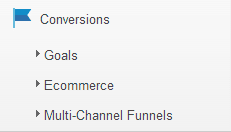
This section is all about trailing defined goals, and seeing what channels were used to right-down these goals. Google Analytics lets you even see what channels assisted a conversion and which transition paths visitors more often than not lead through.
If you materialize to have an ecommerce shop you can buoy launch ecommerce tracking to receive dealings data, much as product performances, purchase amounts, and billing locations.
"With ecommerce tracking, you can better understand the value of your digital business. Use the Ecommerce Reports to segment and analyze your data, and discover relationships between your marketing campaigns, visitor date, and transactions." – Google
External resources
Under you can find a list with pertinent golf links to resources which cover Google Analytics in more detail.
- Udemy online course: Getting Started with Google Analytic (gratis)
- Google Analytics: Get the most out of your reports – Apparatus Checklist
- Google Analytics: All about visibility information filters
- Google Analytics: Google Analytics IQ Lessons – Encyclopaedism Middle
- IMImpact: Web stats alternatives to Google Analytics
- ePower: Google Analytics Gloss
Terminal words & expectation on the 5th and last part
Setting upwards a web analytics instrument like Google Analytics can consume some time until it's organized. But it's worth IT! You get tons of information you pot use to analyze your website and the effectiveness of your marketing efforts.
Make changes based happening your data, check and make changes over again. This is a ne'er ending process, but without constant testing and optimization your website won't improve.
In the next (and last) part of this serial publication, I get in to a greater extent detail on optimizing your website, conducting so-known as A/B tests and improving conversion rates.
If you have any feedback or questions regarding World Wide Web analytics, feel free to military post them in the comments below. Also construct sure to subscribe to our newsletter and social media channels to stay astir-to-date!
Source: https://trendblog.net/the-ultimate-online-marketing-guide-for-small-businesses-part-4-web-analytics/
Posted by: thompsonprien1967.blogspot.com
0 Response to "Understanding Web Analytics - Small Business Guide - thompsonprien1967"
Post a Comment